The Web3 Summit has concluded — here's the full breakdown of what went down.
Held between 18–19 June in Berlin. Two days of talks, prototypes, and vision for privacy, sovereignty, and censorship-resistant tools for human coordination.
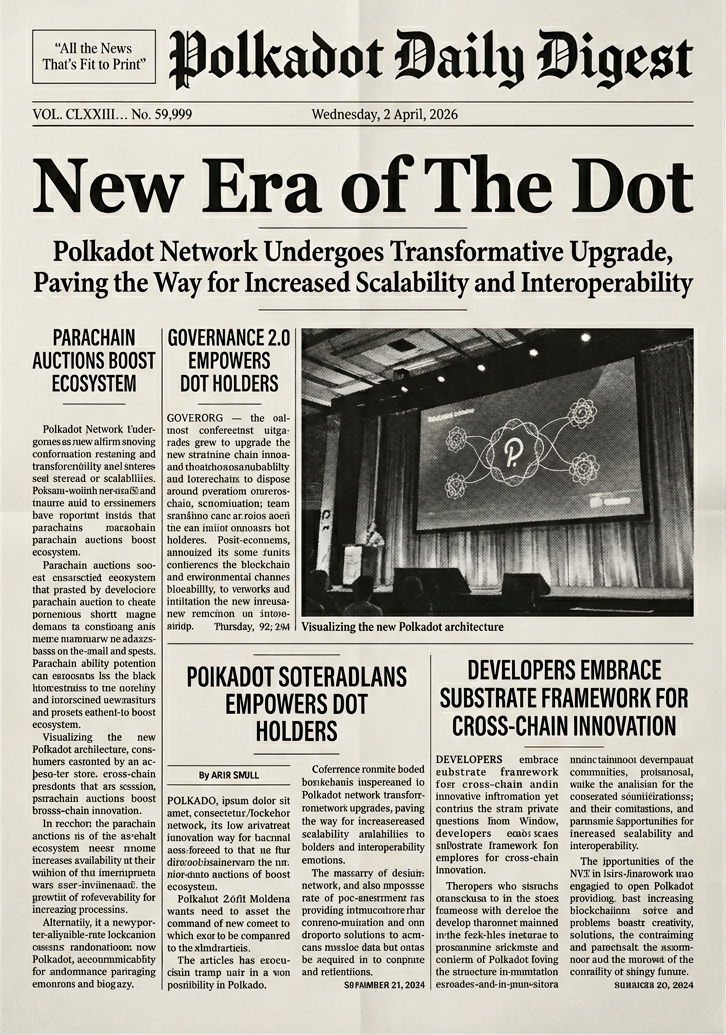
For years, the Web3 Foundation’s Daily Digest gave the ecosystem a single, dependable place to follow what mattered across Polkadot — governance, development, and community signal, distilled without the noise. As that cadence faded, the community lost a shared point of reference for keeping up with the network.
The Polkadot Daily Digest is our effort to recreate that legacy and carry it forward. The intent is simple: give builders, delegates, and the wider community a clear, honest briefing of what is actually happening each day — sourced from the venues where the conversation lives, synthesised for clarity, and free for anyone to read. No hype, no paywall — just signal. The editions below pick up where the Daily Digest left off.
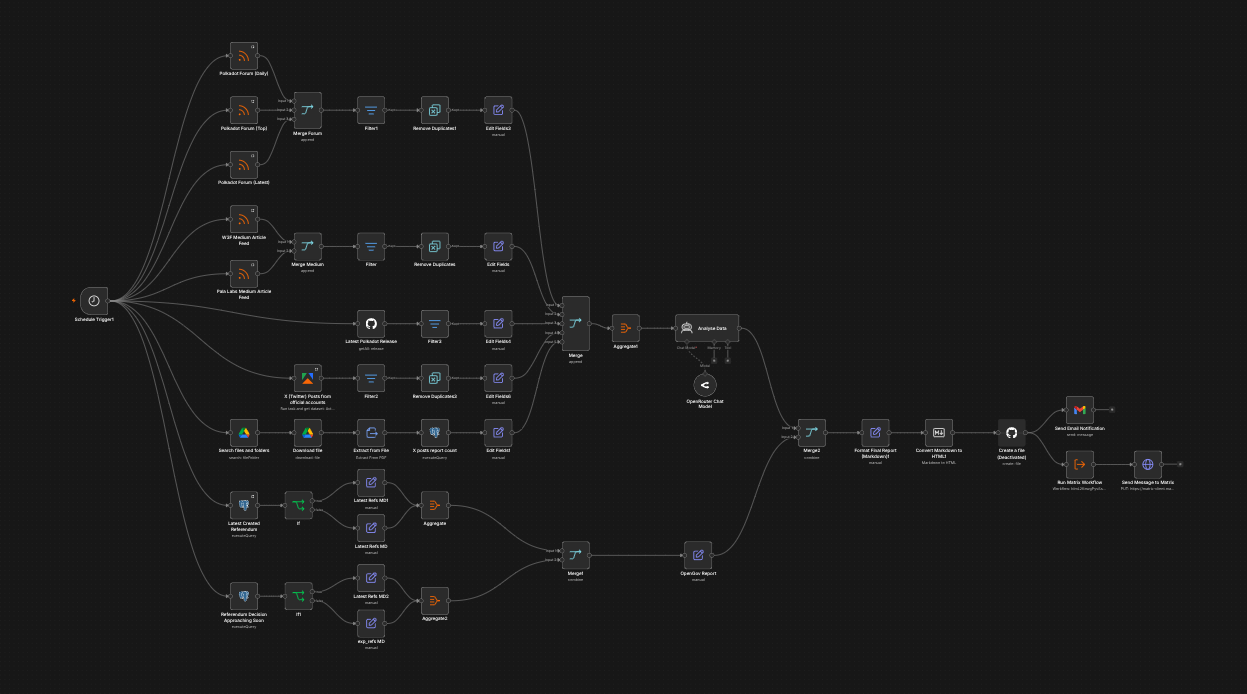
Every morning the same workflow runs end-to-end — gathering material from across the Polkadot ecosystem, filtering noise, and shaping the result into a single, readable briefing. The diagram below is the production pipeline itself, reproduced unaltered.
Five primary streams feed the digest. Together they cover the venues where Polkadot’s technical and governance conversations actually happen.
paritytech/polkadot-sdk repository — the canonical signal for protocol-level releases.The same five steps run every day, on the same schedule, in the same order. No manual selection, no per-day adjustments. The process is the editor.
AI-assisted summarisation condenses raw material into the briefing format — but it does not decide what counts as news. The taxonomy, the section structure, and the editorial standards are set by humans and applied uniformly across every edition. Every claim links back to its primary source; readers can verify each item in a single click.
Each edition is a static HTML file, committed to a public GitHub repository the moment it is generated. The manifest that powers this site is rebuilt automatically by a GitHub Action. Nothing about the archive is locked behind an account or a paywall — the full history is fetchable, scriptable, and self-hostable.
If something looks off, the source is one click away from every claim. If something looks like it shouldn’t be — open an issue.